


KITCHEN SECTION (Only Custom/On Demand)
- MODERN IDEAS
- Jul 22, 2022
- 6 min read

Updated: Jul 31, 2022
When a kitchen is built custom, the features are also customized to your needs and wants. A custom kitchen has the elements a homeowner values while avoiding the features they don’t. When building a custom kitchen there is no need to settle for average dimensions, the dimensions and designs are customized. If a homeowner wants cabinets of a certain size they are able to get the cabinets they dream of with countertops that are the perfect height for their needs.
The features a custom kitchen has improved the functionality of the kitchen, as it matches the homeowner’s lifestyle. The accessories, the drawers and more allow for improved storage and optimal useage.

Open-plan American kitchens have the kitchen, dining-room and lounge area typically combined into one space. This has several benefits, both in terms of functionality and aesthetics. They are most ideal for small homes in which space must be used as smartly as possible. Saving space and concentrating all the necessary elements for cooking and eating are important advantages offered by this type of kitchen.
American kitchens are practical, functional and comfortable. This style kitchen is one of the best types for integrating all the kitchen furniture and appliances, resulting in an elegant and original space. One of the classic accessories found in an American kitchen is the island, an extremely versatile and large element that can be used to prepare or serve food.
Kitchen islands come in many different sizes and shapes to offer a multi-functional space. Silestone adapts perfectly to this style due to its wide color range, which can help generate continuity with the rest of the home.
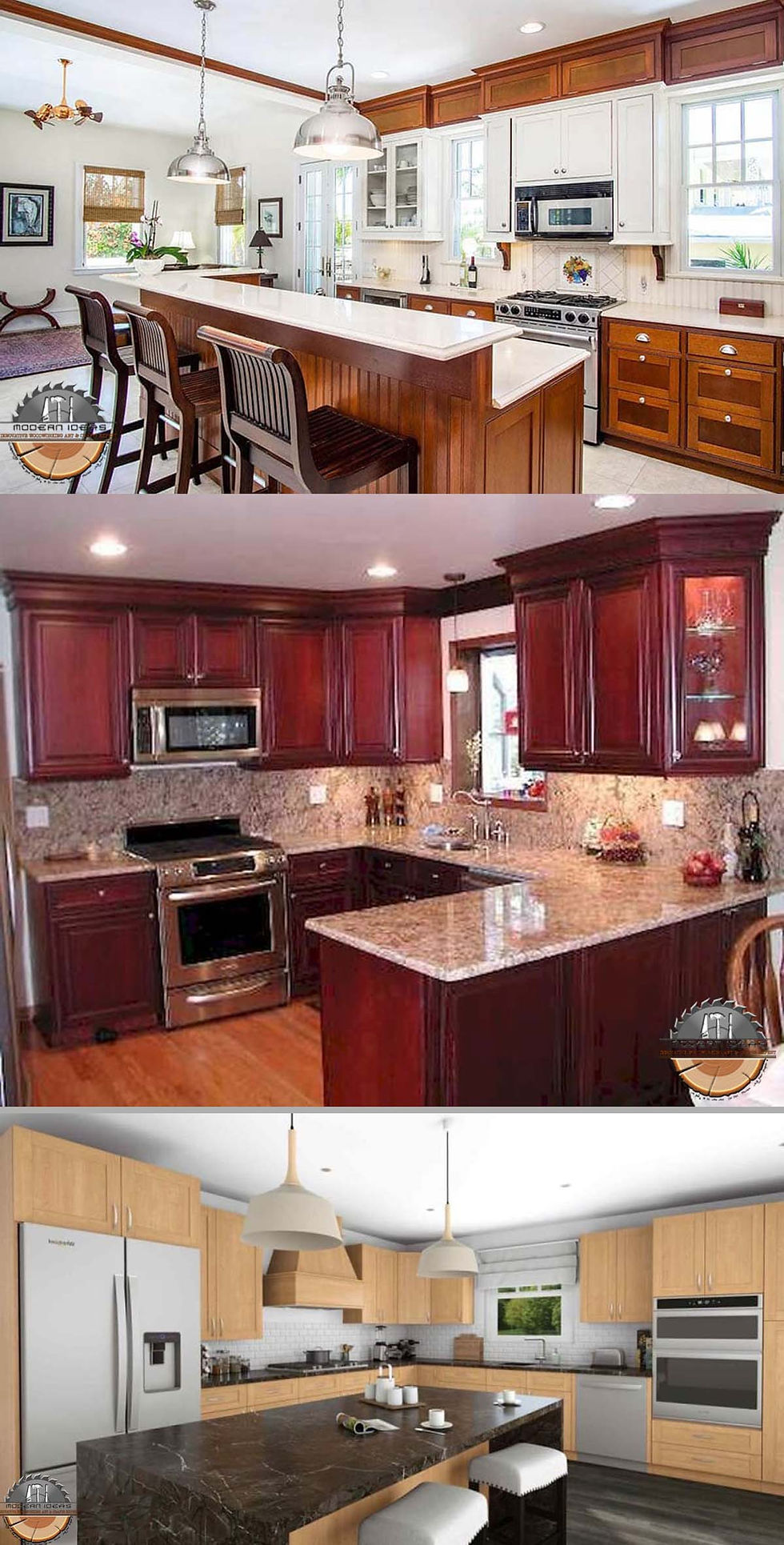
European Kitchens are designed to be minimalist and sleek in design. Homes in Europe are smaller and so are kitchens, therefore the focus is on functionality and efficiency. Kitchen cabinets are no exception. In order to maximize space, European kitchen cabinets are often simple. They feature flat surfaces, flush doors, little to no hardware and do not have many decorations or “frills”.
European kitchens have frame-less construction - or full overlay. This means, cabinets are constructed without a face frame attached to the front of the cabinet box. All that is visible are flat door and drawer fronts. This frame-less construction offers a seamless look while maximizing space as there is no divider in between the cabinets. Because of this frame-less construction, hinges and hardware are often hidden - adding to the seamless, streamlined aesthetic.

Traditional Italian
The traditional Italian kitchen design feels rustic. They feel warm and cozy, and also incorporate outdoor elements such as terra cotta and stone, as well as other natural elements.
• Lighting – If you want the rustic look, avoid modern lighting. Choose charming sconces and wrought-iron chandeliers. For a modern twist, aim for shiny and contemporary styles. • Colors – Rustic Italian designs use warm colors, often golds, oranges, and warm yellows that mimic a sunset. Consider a splash of blue in tiles to evoke the sea. • Floors – A rustic Italian design aims to incorporate the outdoors with the indoors. So, your floors should be a natural material. You can choose for hardwood, or terra cotta, stone, or natural ceramic tiles. • Furniture – The kitchen is the hub of your home if you want to accommodate everyone considers a large wooden table for your rustic kitchen. • Accessories – Accessories will bring your rustic kitchen to life. Choose antiques, bright dishes on display, pottery, herbs potted in clay pots for the windowsill, and hang your pots and pans from ceiling racks.
Modern Italian
While the majority of people will think of the above at the mere mention of an Italian kitchen design, it isn’t the only style. Italy has long been at the forefront when it comes to design, from interior design to fashion, architecture and… kitchen design, of course. Italy is finally getting recognition for their contemporary designs.
Sleek and slick, featuring a streamlined design with integrated appliances. Forget unnecessary accessories or frills, it’s all about style and function. Essentially, the polar opposite of its traditional counterpart.
No matter which one you prefer, you can definitely incorporate a variety of the elements into your space.

Modular kitchens are kitchens that can be assembled using individual units, these units are then fitted to form the skeleton of your new kitchen. Designer Kitchens for less units are supplied ready made up with the doors fitted. There are various types of modular units, most kitchens comprise of floor , wall and tall units.
Most kitchens available on the market today are modular. This has changed from 40 years ago when kitchens tended to be bespoke. Modular designs make stunning designer kitchens available for the majority of people, no longer do you need to work with a specialist cabinet maker to design and build you a new kitchen.

Once all of the groceries, utensils, dishes and electrical appliances have been stored in a typical kitchen, one fact often becomes very clear. There's abundant storage space, but precious little workspace. For this reason, kitchen designers have developed a special counter called a kitchen island. A kitchen island is a centrally-located countertop used primarily for food preparation and auxiliary cooking needs. In many kitchens with busy families, the island also doubles as a table for quick meals.

A kitchen peninsula is similar to an island in that it provides additional counter space in your kitchen. The difference is that a peninsula is an extension of the existing kitchen cabinets and counters, rather than a free-standing installation with space around it. A kitchen with a peninsula gains significant versatility as a seating area and prep space.

One wall kitchen designs are often found in smaller homes, apartments and lofts. A one wall or single line kitchen keeps all the cabinets, appliances against one wall of the home to save space. This design can actually be very efficient due to the countertops proximity to appliances and the sink.

The term “galley” actually refers to kitchens on ships, planes, and trains, where the elongated spaces necessitate hallway-like floor plans. But galleys have transferred to terra firma and are found in many homes, particularly smaller ones.
A galley kitchen is a long, narrow kitchen that has base cabinets, wall cabinets, counters, or other services located on one or both sides of a central walkway. Less often, a galley is called a corridor kitchen because its main traffic lane is a long, narrow aisle.

L-Shaped kitchen layout is formed of two adjacent walls and runs of cabinetry, often referred to as the “legs” of the L. The length of the legs of the L can vary based on the available space of the area and the shape itself is quite suitable for both large and small kitchens.
The L-shaped kitchen layout is a standard design for home kitchens. The L-shape layout was developed long ago, but the ergonomics of it make it a sensible and popular choice that is appropriate even for the modern home kitchen. What makes the L-shaped kitchen design so efficient is that it facilitates a sensible work triangle to the preparation, cleanup and cooking areas. The L-shape is most frequently used in smaller kitchens that cannot incorporate an island or G-shape.
The L-shaped kitchen is not a dated style or difficult to match to any décor. The shape simply refers to the floor plan layout and does not constitute any additional restrictions or requirements passed that. To achieve a proper L-shaped design, the kitchen must be built at a corner where two walls form a perpendicular angle and where one wall is twice the length of the other.

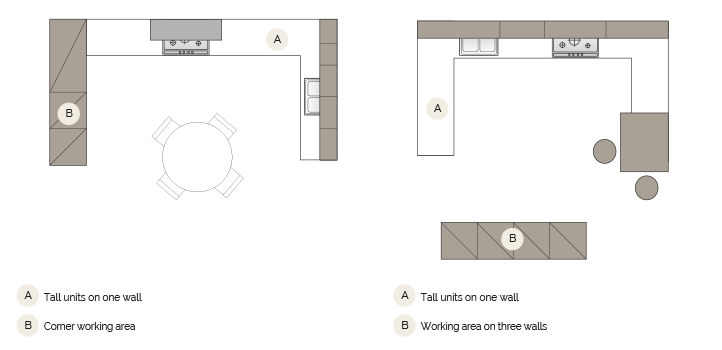
A U-shaped kitchen is a common layout that features built-in cabinetry, countertops and appliances on three sides, with a fourth side left open or featuring a cased opening or entry door. In larger spaces with enough width, U-shaped kitchens are often outfitted with a freestanding island or seating.
the U Shaped Kitchen, also known as the Gulf or the Horseshoe kitchen, requires a fair amount of space. It develops along three adjoining walls to enclose a central dining area, the dream of anyone seeking a kitchen with unlimited movement.
a U shaped layout with one wall dedicated to tall cabinets with appliances and two working areas in the corner with a cooktop and sink
a solution similar to that described above, with the addition of a snack counter or table to one of the working areas
a solution similar to the preceding one, enriched by the addition of a central island for storage and support
a U Shaped Kitchen with three working areas, one used as a divider between the kitchen and the living area in a large open space
a U Shaped Kitchen with three working sides and a separate wall of tall cabinets to create a truly spacious kitchen



Comments