


KITCHEN CABINET MATERIALS (SHEETS)
- MODERN IDEAS
- Aug 8, 2022
- 8 min read

The super glossy UV finish is achieved by coating the engineered wood boards with nine layers of UV coats in a span of more than 10 days. Highly durable and available in variety of color's, ultraviolet (UV) finish kitchen cabinets are increasingly becoming popular in Indian households.
Ultraviolet (UV) finish: Pros
Highly durable
Heat and moisture-resistant
Not prone to denting and scratches
Available in many colours and gloss options
Ultraviolet (UV) finish: Cons
More expensive than laminate or membrane


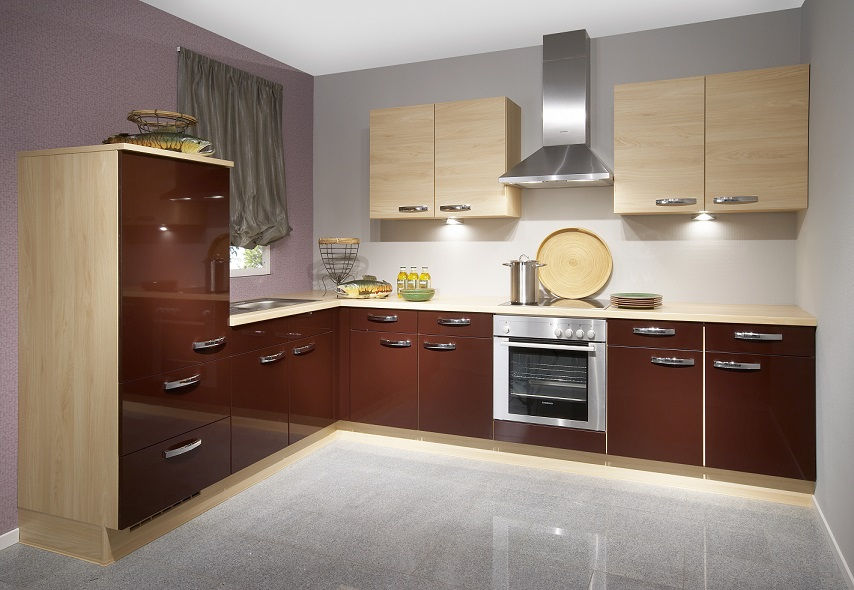

WPC boards have gained popularity as an alternative to natural wood and plywood.
The fact that WPC board manufacturing does not contribute to deforestation forms one of the primary reasons behind its increasing use. The full form of WPC boards is Wood Plastic Composite board.
Its composition is 70% virgin polymer, 15% additive chemical, and 15% wood powder. These boards are widely used in the construction sector for their high strength and durability.
WPC boards are associated with many advantages. Let’s get into details:
Advantages of WPC Boards
1. Termite resistance: WPC boards make good material for termite-proof furniture. This is one of the main advantages WPC wood offers over natural wood. In addition, these boards make a perfect solution for outdoor applications.
2. Moisture resistance: Unlike conventional building materials, WPC woods are resistant to moisture. They make great material for kitchen and bathroom cabinets where the chances of moisture retention are high.
3. UV rays resistant: WPC boards come in multiple colors. In general, the color of the furniture kept outside fades in heat. WPC boards offer UV rays resistance, making them suitable for exterior applications.
They are widely used in making facades, landscape items, flowerpots, and garden furniture.
4. High durability: Durability is one of the essential benefits offered by WPC boards. They are not affected by rain, chemicals, humidity, and other environmental conditions. They are also easy to use. Conventional tools can be used to fix these boards wherever required.
5. Eco-friendly: WPC wood is biodegradable. It can be 100 percent recyclable with recyclable materials such as wood, agricultural, and plastic waste used in its production.
Also, there is minimal waste generation in the manufacturing process. WPC woods are also reusable, and most of them are available with a buyback guarantee.
Disadvantages of WPC Boards
1. WPC boards may mimic natural wood but can be easily identified. Furniture made from WPC board appears like natural wood, but the finishing will not be that high-end. The premium quality natural wooden look cannot be obtained using these boards.
2. WPC boards offer very low resistance to extreme temperatures. Therefore, it affects the application and the production of WPC boards. For example, laser cutters cannot be used to cut the boards as they may burn them.
Similarly, its application in the kitchen should be well thought out as very hot utensils cannot be placed on it.
3. The initial cost is known to be higher than other alternative materials.


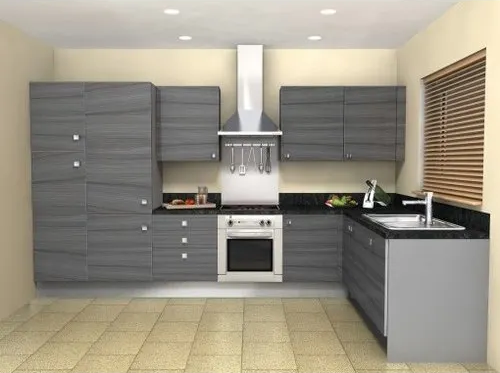
Those who want a unique look for their kitchens would eventually fall for acrylic finish despite being expensive. A non-toxic, high-gloss finish, acrylic provides a sophisticated yet reflective appearance without any semblance of being tacky or loud. Available in a wide range of colours, the acrylic finish kitchen cabinets give a mirror-like sheen to the entire area.
Acrylic finish kitchen cabinets: Pros
Long-lasting
Scratch-resistant
Provides a luxurious and sophisticated look
Available in a wide range of colours and finishes
Acrylic finish kitchen cabinets: Cons
Very expensive kitchen cabinet finish


The laminate finish for kitchen cabinets is manufactured by combining thin layers of flat paper and plastic resins. These two materials are first pressed together under high pressure. Then, the upper layer of the sheet is printed with a decorative pattern or colour.
Laminate finish: Pros
High durability
Heat and moisture-resistant
Easy to clean
Comparatively affordable
Variety of finishes (matte, glossy, and ultra-glossy)
Laminate finish: Cons
Lacks lustre offered by acrylic finish

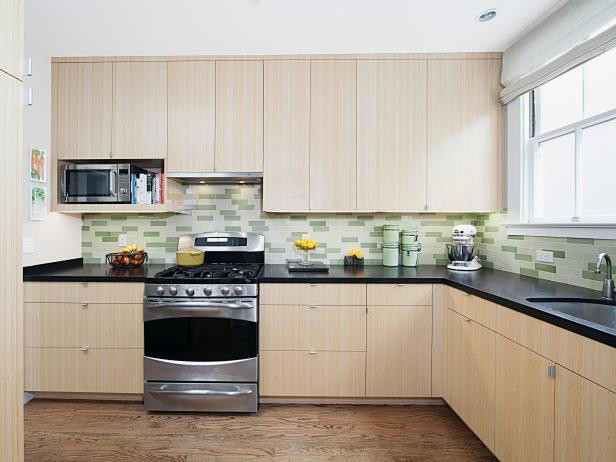
Easy on the pocket, poly-vinyl chloride (PVC) sheets are composite plastic sheets, available in a variety of light colours. Easy to fix and maintain, PVC sheets can be installed without a substrate. Available in two types – hollow boards and foam – PVC sheets offer the luxury to install both heavy and light boards. The waterproof and oil-proof surface makes PVC sheets an ideal choice for kitchen cabinets.
PVC sheet Pros
Easy to fix
Affordable
Easy to maintain
Termite-resistant
Anti-corrosive
Easy to source and replace
PVC sheet Cons
Limited variety of colours and patterns
Prone to fire damages
Discolouration\


Particle boards are also known as chipboard. It is a product which is engineered using wooden products such as wooden chips, sawmill shavings including the sawdust, synthetic resin or another kind of suitable binder that is pressed firmly by using hot compression to make boards and sheets. The furniture made with particle boards are commonly available and are mostly used in recent times due to its cheap cost.
Characteristics of Particle Boards
Particle boards are affordable compared to other solid timber products as these are cheaper.
The boards are denser and uniform than other conventional wood and plywood’s available.
Particle board can be painted or veneer can be applied onto the surface to make it attractive.
Although the board is denser, it is known to be the lightest and weakest amongst the other fiberboard such as hardboard (high-density fiberboard) and medium-density fiberboard.
Higher the density of the particle board, higher is the strength and resistance if screw fasteners have to be unfastened.
The furniture which requires large pieces of wood are made using particle boards such as table tops, TV cabinets, desks, etc. A lot of time is saved to simply bond two pieces of wood together to achieve the desired size.
Advantages of Particle Board
Low cost: The affordable cost of the particle board is the main advantage over other boards such as solid wood and other plywood. Thus, it can be concluded that the furniture made from particle boards are less durable compared to solid wood and plywood because of low cost.
Pre-laminated board: The furniture with particle board can be bought simple. Then thin sheets of veneer or plastic laminate can be glued on the surface to add beauty and aesthetic value. This also increases the durability of the pre-laminated particle boards. Although, plywood or solid wood furniture also requires lamination.
Lightweight boards: The furniture made with particle boards are easily transported from one place to other as the boards are light in weight. Although, being easy to move, the strength of the furniture is questionable compared to furniture made with plywood or solid wood. The most common rule while purchasing the wood is that, the denser the wood, the strength of the furniture will be high and heavy.
Ready-made furniture can be prepared by using particle boards. The furniture is machine manufactured to obtain desired dimensions. The larger size pieces can be prepared and thus these can be easily used for making Thus, the cost of the furniture is reduced to almost half as no carpenter work is involved and ready to buy furniture are available with no waiting time for customers.
Other advantages of the particle board furniture are that it is renewable and one can easily reuse the board for making other furniture. The boards are available in larger sizes. The furniture made of particle boards will not swell and does not have any natural defects and it also has thermal and soundproof.
Disadvantages of Particle Boards
The strength of the furniture prepared using particle boards is less compared to other plywood furniture. Lesser strength is attributed to low density and thus the handling of the furniture should be very careful as they can be easily damaged while handling.
The life of the furniture prepared with particle board is less. The resistance to moisture and humidity is also low. This is the major drawback of the particle boards.
The particle boards should not be used for joining purpose as they can be easily damaged.
The particle boards are not eco-friendly as solid wood furniture.

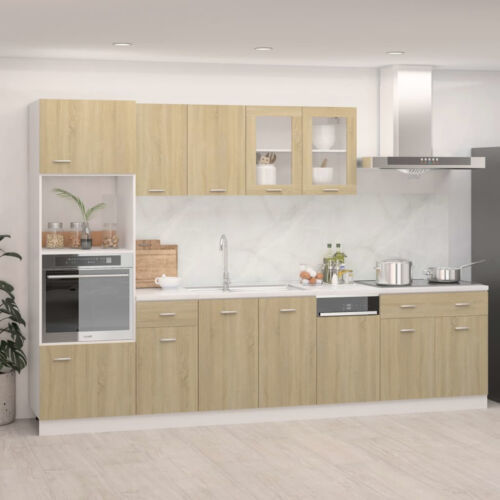
LASANI OR MDF (Medium Density Fiberboard)
Medium Density Fiberboard (MDF) is mainly used for internal usage applications, in part due to its inadequate moisture resistance. It is accessible in raw form with a finely sanded exterior or with decorative coats such as wood veneer, melamine paper, or vinyl.
Medium Density Fiberboard (MDF Board) is a wood material prepared by separating the softwood or hardwood residuals into the wood fibers, frequently in a defibrillator, wax mixing and forming a shape-like a panel by using high pressure and temperature.
Medium-density fiberboard is mostly more dense than plywood. It is composed of separated fibers but can be utilized as a building material same in application to plywood. It is tougher and denser than particleboard.
Medium Density Fiberboard (MDF Board) is normal density fiberboard. A building and DIY sheet material generally used in cabinetry, furniture, and molding.
As a material, Medium Density Fiberboard (MDF) is very versatile and cost-effective, making it an incredible choice for an entire host of projects.
Medium Density Fiberboard (MDF) isn’t frequently used as a finish alone but is instead finished with a veneer or laminate, providing the impression of real wood.


Wood and plywood are two different materials. Plywood is an illusion of wood. This engineered wood is made up of slices or sheets of solid wood, pasted over a composite substrate. Plywood is stained and polished to achieve a desired colour and texture.
Plywood: Pros
Affordable
Durable
Available in matte, semi-gloss, and high-gloss finishes
Plywood: Cons
Susceptible to discoloration due to heat
Need polishing from time-to-time
Prone to stains
Not scratch-resistant


You may wonder if solid wood kitchen cabinets are worth the expense. We believe they are. And here are some of the biggest reasons why.
Advantages of Solid Wood Cabinets
Solid wood kitchen cabinets are the best material you can get. They are also:
Durable and Strong
Solid wood cabinets last for decades. They hold up to wear and tear, some more than others, depending on the species of wood.
Stainable/Paintable
Another great thing about real wood cabinets is that you can stain or paint them to match your aesthetic.
Beautiful
There is nothing more beautiful than the warmth and character of natural wood for floors, cabinets, and furniture. You are bringing in a bit of nature into your home that doesn’t look artificial or manufactured.
Custom
You can have any size or shape you like because wood is easy to work with for cabinet makers.
SOME TYPES OF WOOD ARE FOLLOWING.
Deodar/cedar or Diyar wood, Walnut, Teak or sagoon, Pine/sanober wood, Hemlock wood, Spruce wood, Fir /chir wood, Sheesham, Safeda or Eucalyptus wood , Oak, Hickory, Cherry, and Maple.


Wood veneers are one of the popular interior materials, which are used to provide finishing to various wood based products. Wood veneer is a very thin slice of wood which is obtained from a tree log. It is glued on to different types of engineered woods such as plywood, MDF, blockboard, particle board, etc. to give a finishing and decorative look. Many interior designers use wood veneer to improve the aesthetics of kitchen cabinets. Wood veneer is available in different types, based on types of wood species, based on matches, based on cut, etc.
There are various other reasons to use wood veneer. The most important is that it is economical than using solid wood. They are largely used in residential projects, hotel and office projects. Before using wood veneers in your home, you must be aware of advantages and disadvantages of wood veneers. Here we have given information on advantages and disadvantages of wood veneers, which homeowners must know before buying them.
Veneers can be an affordable option if you’re looking to reface or refinish your kitchen or bathroom cabinets, but they aren’t the way to go if you want a quality, long-lasting cabinet finish.
Our experts at Cabinet Coatings would never use veneers on your cabinets for 3 reasons:
1) They damage easily
2) The material beneath them has a short lifespan
3) They don’t look as good as other, high-quality finishes



Comments